
FBA Prep Done To The Current Specification
Amazon rejects shipments for reasons that are entirely knowable in advance. Prep is a compliance job, and the whole value of outsourcing it is that somebody else is tracking what the requirements are this month.
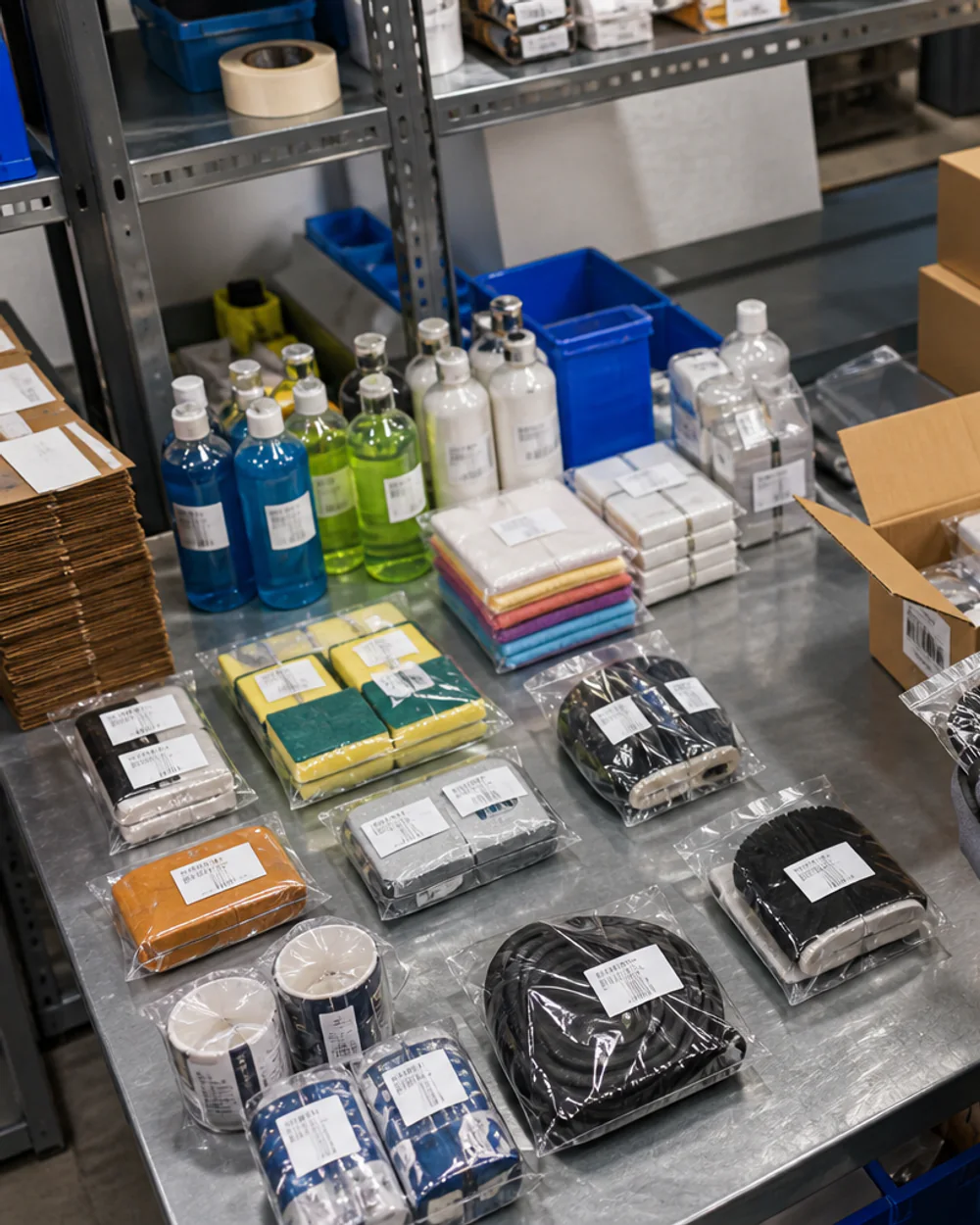
What actually gets shipments rejected
Almost every FBA rejection traces back to one of a small number of preventable failures.
FNSKU labels wrong or obscured
Wrong label, unreadable label, or a manufacturer barcode left visible next to it. Amazon scans one barcode per unit and will not adjudicate between two.
Missing polybag requirements
Items that need bagging, bags without suffocation warnings, or bags over the size threshold without the required print. Each one is a per-unit fee or a rejection.
Carton and pallet non-compliance
Overweight cartons, missing box content information, incorrect shipment labels or unstable pallets get refused at the door.
Expiry and batch requirements
Categories that require expiry dating have specific format and placement rules, and stock is rejected or destroyed when they are not met.
Requirements changing quietly
The specification moves. A prep process that was correct last quarter is a source of rejections this one, and the notification is easy to miss.
How our prep runs
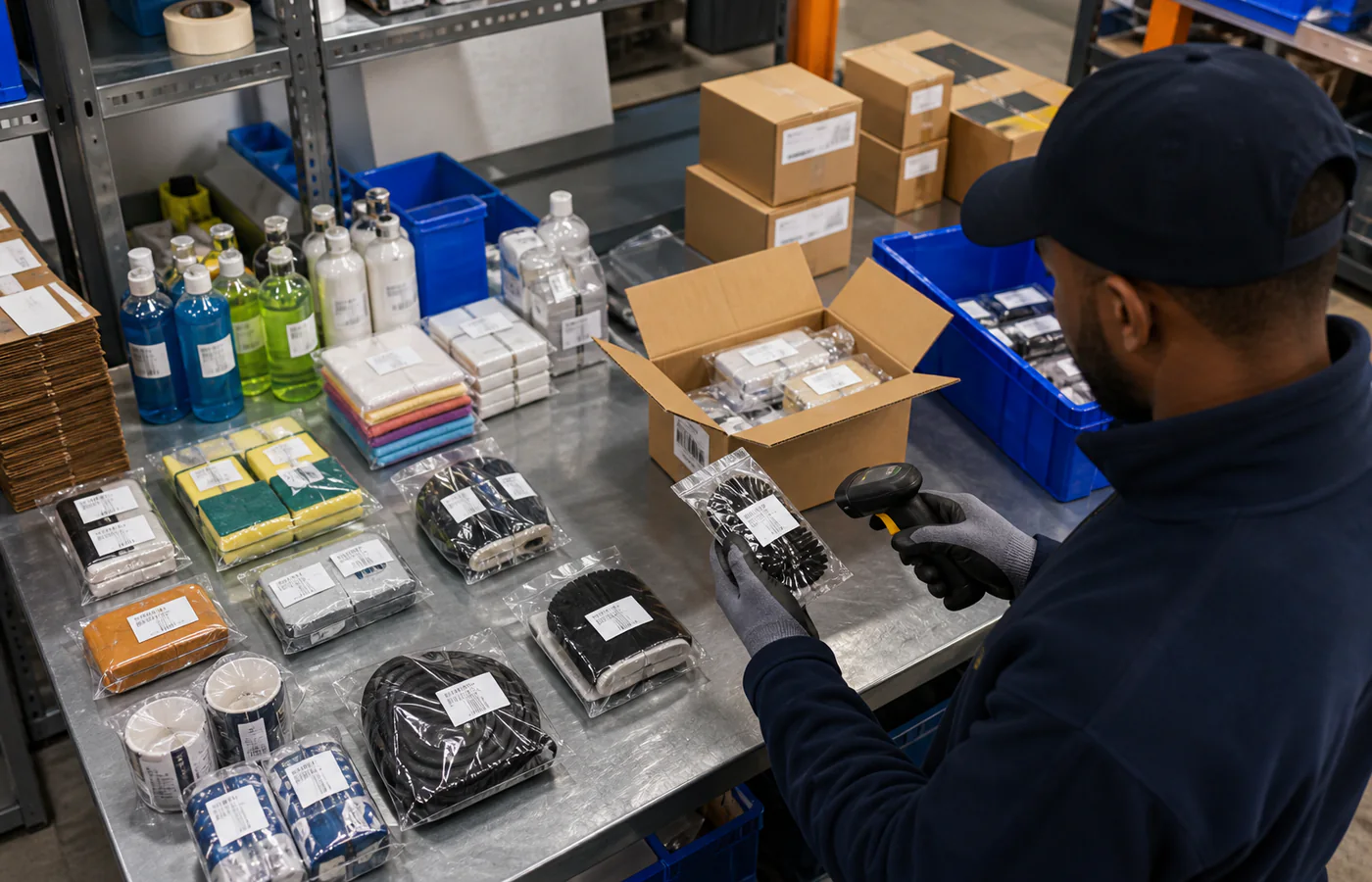
Prep is done against the current published specification for your categories, checked before each shipment rather than against a process document written when the account was set up. That is the actual service: not applying labels, which is easy, but knowing which labels apply this month.
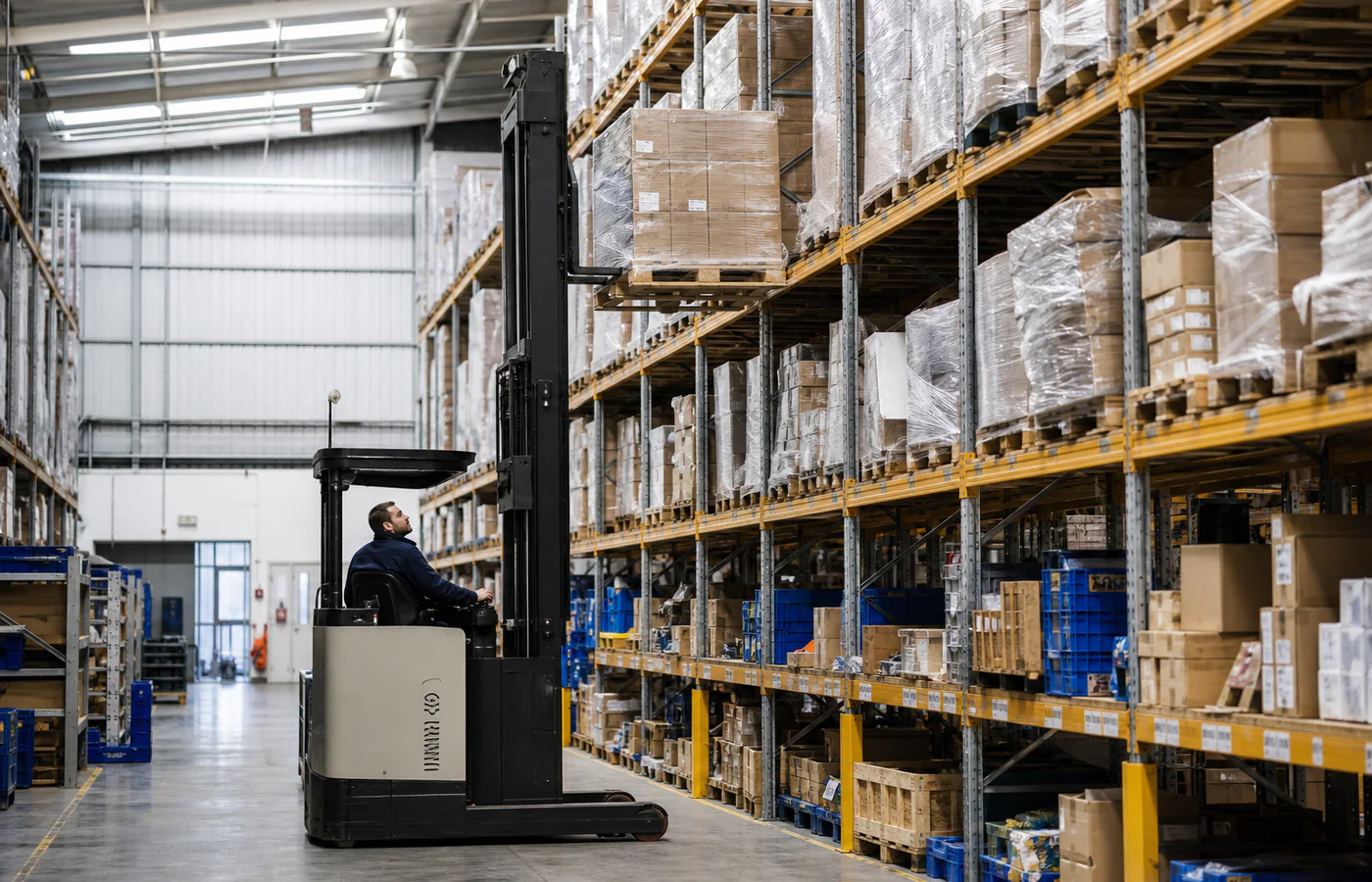
Units are prepped, cartons built and labelled, box content information submitted and the shipment booked. Because we can hold your stock as well as prep it, inbound freight can arrive, be prepped and go into Amazon without an extra transfer leg and an extra provider in between.
- FNSKU labelling with manufacturer barcodes covered
- Polybagging with compliant suffocation warnings
- Bundling and multipack creation with the correct parent barcode
- Expiry and batch marking where the category requires it
- Carton compliance, box content information and shipment labels
- Shipment plans created and inbound bookings made
What each prep type involves
Priced per unit against a timed sample, because these jobs are not equivalent.
FNSKU labelling
The Amazon barcode applied to each unit with any existing manufacturer barcode covered, positioned so it scans on a flat surface rather than a seam or a curve.
Polybagging
Correct bag size, sealed, with the suffocation warning printed at the required size where the bag opening exceeds the threshold. The FNSKU goes on the outside of the bag.
Bundling and multipacks
Units combined into a sellable set, labelled as a single unit with its own barcode, and marked so Amazon does not separate them at intake.
Fragile and liquid prep
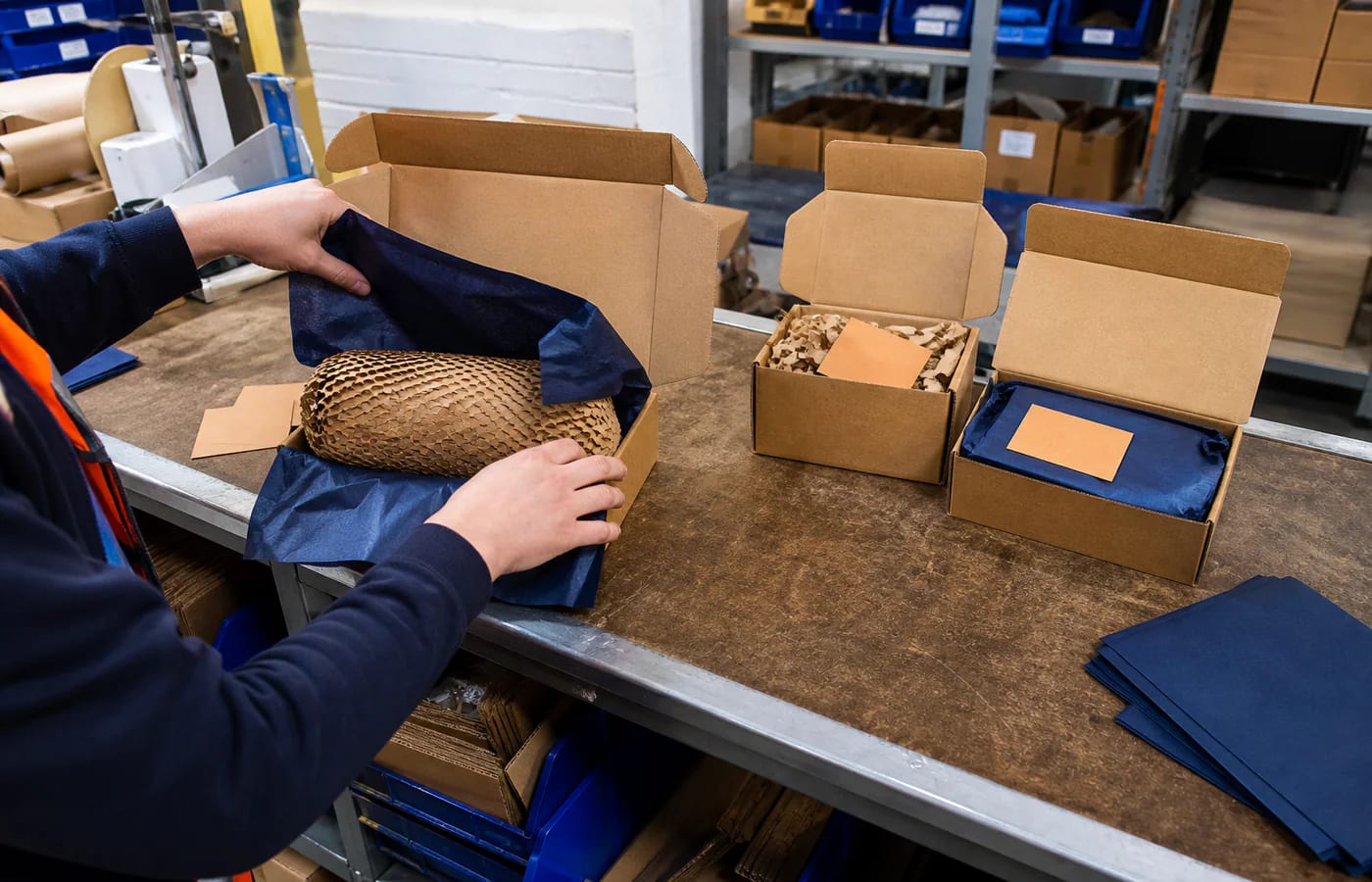
Bubble wrap or opaque bagging where the category requires it, with the additional labelling that applies to liquids and glass.
Expiry and lot marking
Dates applied in Amazon's required format and position, with stock rotated so the shipment goes out oldest-first.
Carton and shipment build
Cartons packed within the weight limit, box content information submitted, shipment labels applied and the inbound delivery booked.
How you know it worked
The evidence for prep quality lives in Amazon's records, not in ours.
Shipment reconciliation
Units received versus units sent, visible in Seller Central. Discrepancies are chased with the evidence from our end.
Box content submitted per shipment
Submitted before the shipment travels, which is what prevents the unplanned-unit problem at intake.
Pre-shipment photographs on request
Sample units and built cartons photographed before dispatch for any shipment where you want the check.
Prep specification agreed in writing
What is applied to which SKU is documented, so a rejection can be traced to a cause rather than argued about.
FBA Prep questions
The ones that come up on almost every call about this.
Yes, and it is the cheapest route. Containers or pallets come straight from the manufacturer to our dock, are checked against the ASN, prepped, and shipped into Amazon — removing a transfer leg and a second handling charge.
Per unit by prep type, plus a per-carton charge for building and labelling the shipment. We time a sample before quoting, because a label is a fraction of the work of a bag-and-bundle and pricing them the same is unfair to one of us.
We work to the current published specification for your categories and check before each shipment. Where a change affects your per-unit cost, your account manager tells you before the next run rather than after the invoice.
Yes, and it is usually the better structure. You hold reserve stock with us at storage rates rather than paying Amazon's long-term storage fees, and we send replenishment shipments against a reorder point you set.
Yes. Removal orders can be sent to us, received, inspected, and either restocked for merchant fulfilment, repackaged for a fresh FBA shipment or disposed of, with the outcome recorded per unit.
We investigate against the prep specification and the shipment records. If the cause was ours, we correct it and cover the rework. If it was a change in requirement or a receiving error at Amazon, we help you evidence the case.
Where to look next

Stop losing units to preventable rejections.
Send your SKU list, categories and monthly shipment volume. We will quote per unit against a timed sample and flag anything in your current prep that looks likely to be refused.