
Returns Handled As A Process, Not A Backlog
Returns are where fulfilment relationships quietly fail. Stock goes into a corner, the customer waits for a refund, and nobody can say what happened to the item.
What an unmanaged returns process costs
Returns get deprioritised because they generate no revenue. That is exactly why they accumulate into something expensive.
Refunds waiting on a physical check
Every day a return sits unprocessed is a day your customer is waiting and your support inbox is absorbing chase emails. On marketplaces, it is also a day closer to a case.
Resaleable stock not back on sale
Returned goods that could be sold sit in a bay instead. At a 20% return rate, that is a meaningful proportion of your inventory earning nothing.
No reason data
Without coded return reasons you cannot tell a sizing problem from a quality problem from a photography problem, so the underlying cause never gets fixed.
Stock figures drifting
Returns restocked without a proper receipt, or never restocked at all, put a permanent gap between the system figure and the shelf.
Disputes with no evidence
When a customer claims they returned something and there is no record of receipt, the argument is unwinnable and you refund by default.
How returns run here
Every return is booked in against its original order on receipt, which is the step that makes everything after it possible. Returns arriving without a reference go to an unidentified bay and onto the same day's exception report rather than sitting anonymously on a shelf until someone works out what they are.
Inspection is against your grading rules, written down during onboarding, so an operative applies your standard rather than their own. The outcome — restocked, repackaged, quarantined or written off — is recorded with a coded reason against the SKU, and written back to your channel where the integration supports it.
- Booked in against the original order on receipt
- Inspected against your written grading rules
- Outcome and coded reason recorded against the SKU
- Resaleable stock back into the pick face, not into a bay
- Outcomes written back to your channel where supported
- Processed within one working day of receipt
The rules you set, and the outcomes they produce
Grading is a commercial decision, not an operational one. You make it once, in writing, and we apply it every time.
Grade A — back to stock
Unopened or as-new, meeting your resale standard. Straight back into the pick face and available to sell again the same day it is graded.
Grade B — repackage then restock
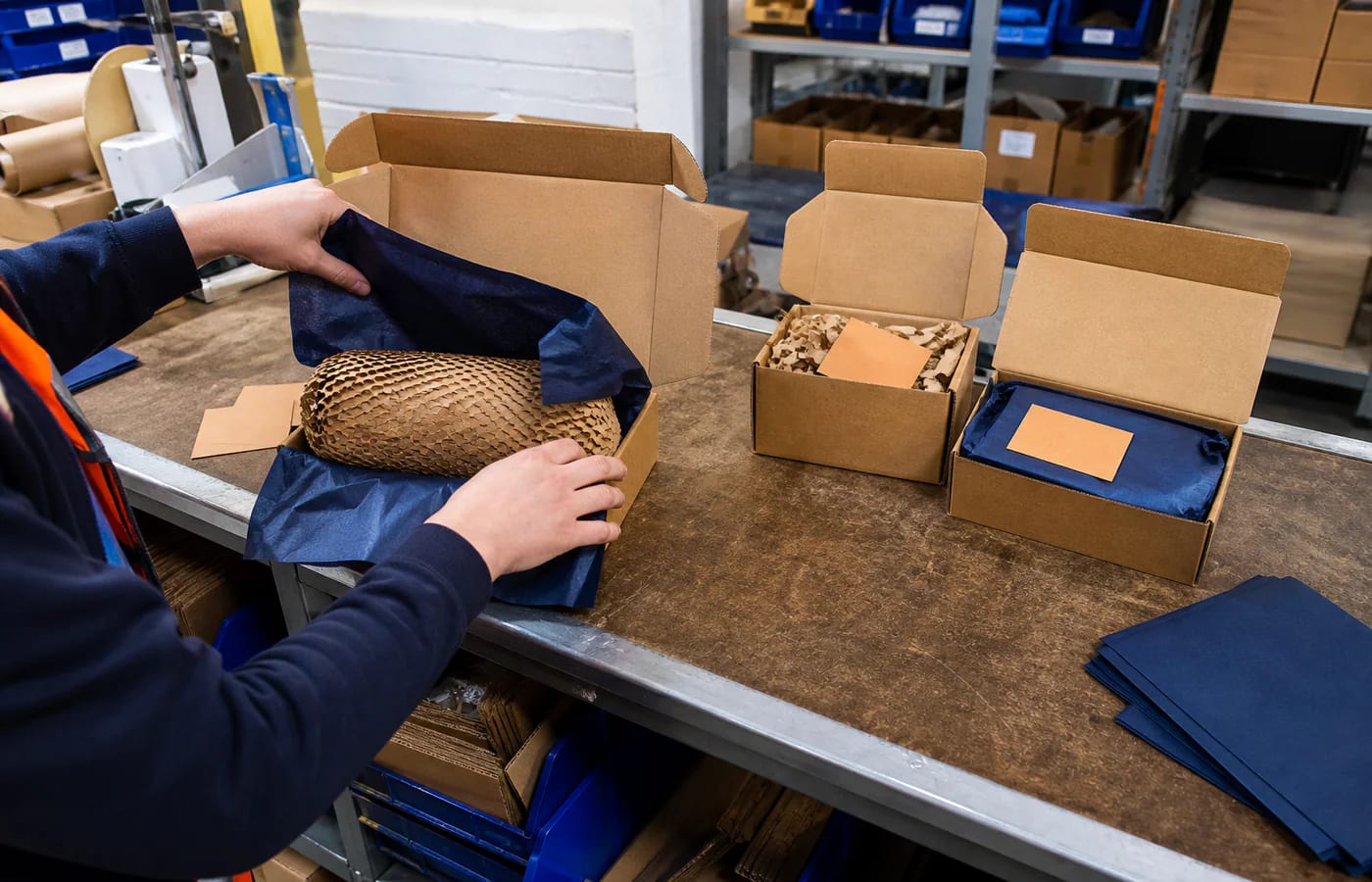
Product sound, packaging damaged. Repackaged to your specification and restocked, priced as per-unit work because the labour is real.
Grade C — quarantine
Held pending your decision. Used for high-value items, suspected faults and anything where the call is worth more than the handling cost of making it automatic.
Grade D — write off
Beyond resale. Recorded against the SKU with the reason and disposed of, or held for supplier claim if you want the evidence.
Reason coding
Too small, too large, not as described, damaged in transit, faulty, changed mind. The codes are yours, and the reporting is what turns returns into product insight.
Serial and batch capture
Where items carry serials or batch numbers, they are captured on return, which is what makes warranty claims and recall traceability possible.
The evidence trail
Returns disputes are won or lost on records, so the records are the service.
Receipt logged against the order
Date received, condition on arrival and the grade applied. A customer claiming a return that never arrived is answerable from data.
Photographs on exceptions
Damaged, faulty or disputed returns are photographed at inspection, so a supplier or carrier claim has evidence behind it.
Reason reporting by SKU
Return rate and reason breakdown per product, which is where a sizing or listing problem becomes visible.
Turnaround measured per return
Time from receipt to graded outcome, against the one-working-day commitment.
Returns Management questions
The ones that come up on almost every call about this.
Within one working day of receipt. That is the contractual commitment, and it is the figure quoted everywhere else on this site. Where a category has an unusually high return rate we will agree the capacity for it up front rather than discovering it in week three.
Per return received and graded. Repackaging, refurbishment or any other per-unit work is quoted separately, because a return that needs rebagging is a different job from one that needs a visual check.
We record the outcome and write it back to your channel where the integration supports it, which is normally what triggers your refund. The refund decision itself stays with you — it is a commercial call about your customer, not a warehouse one.
They go to an unidentified bay and onto that day's exception report with a photograph. Most get matched from the contents or the sender address within a day or two. What does not happen is them sitting anonymously on a shelf.
Yes. Brands moving to us often need historical returns received during the transition. It is priced the same way and needs an agreed grading standard for stock that may not be in our system yet.
We integrate with the returns portals brands commonly run rather than operating our own front end. Your customer's experience stays yours; what changes is what happens once the parcel reaches the building.
Where to look next


Turn returns from a backlog into data.
Tell us your monthly return volume and your category. We will price the processing and set up the grading rules with you before the first one arrives.