
Kitting And Assembly, Timed Before It Is Quoted
Per-unit assembly work is where fulfilment quotes go wrong most often, in both directions. We build a sample and time it before pricing, because guessing at this makes the job unprofitable for one of us.
Why assembly work is hard to buy
It is the least standardised thing a 3PL does, and the most likely to be priced on an assumption.
Quotes based on a description
A quote given from an email description of a bundle is a guess. It is either too high, and you overpay, or too low, and the provider starts looking for ways to make it work.
Component stock counted as finished goods
If the components and the built kits are not tracked separately, the stock figure becomes fiction the moment assembly starts.
Builds made on demand at the worst moment
Assembling a kit at the point of order adds the build time to the dispatch window, which is how a same-day cut-off quietly stops being met.
Subscription cohorts hitting at once
A monthly box means an entire cohort ships on one day. Built on the day, that is a wall. Staged in advance, it is a normal shift.
Quality drift across a long run
The five hundredth kit differs from the first unless there is a documented specification and a check inside the run.
How assembly work is set up and run
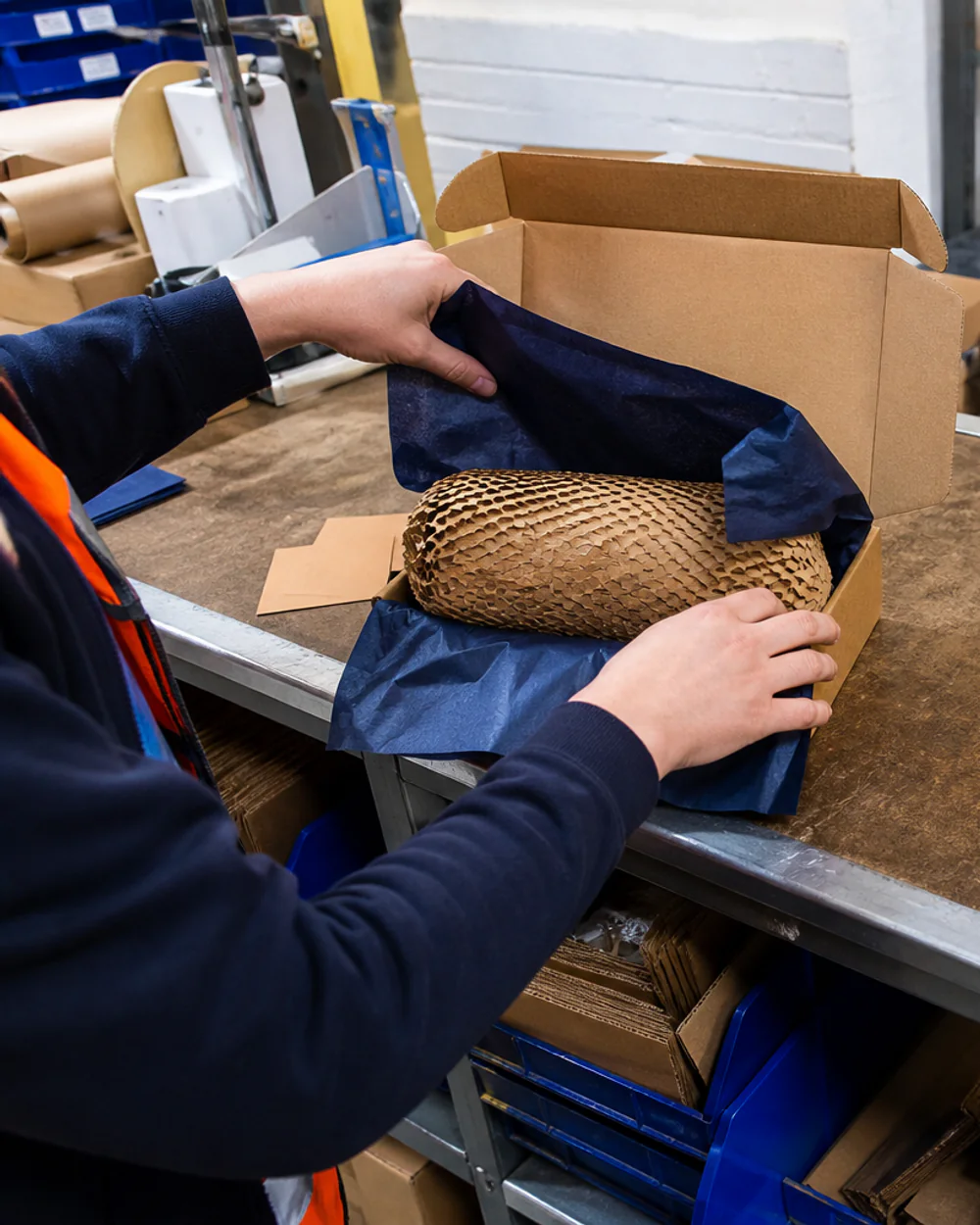
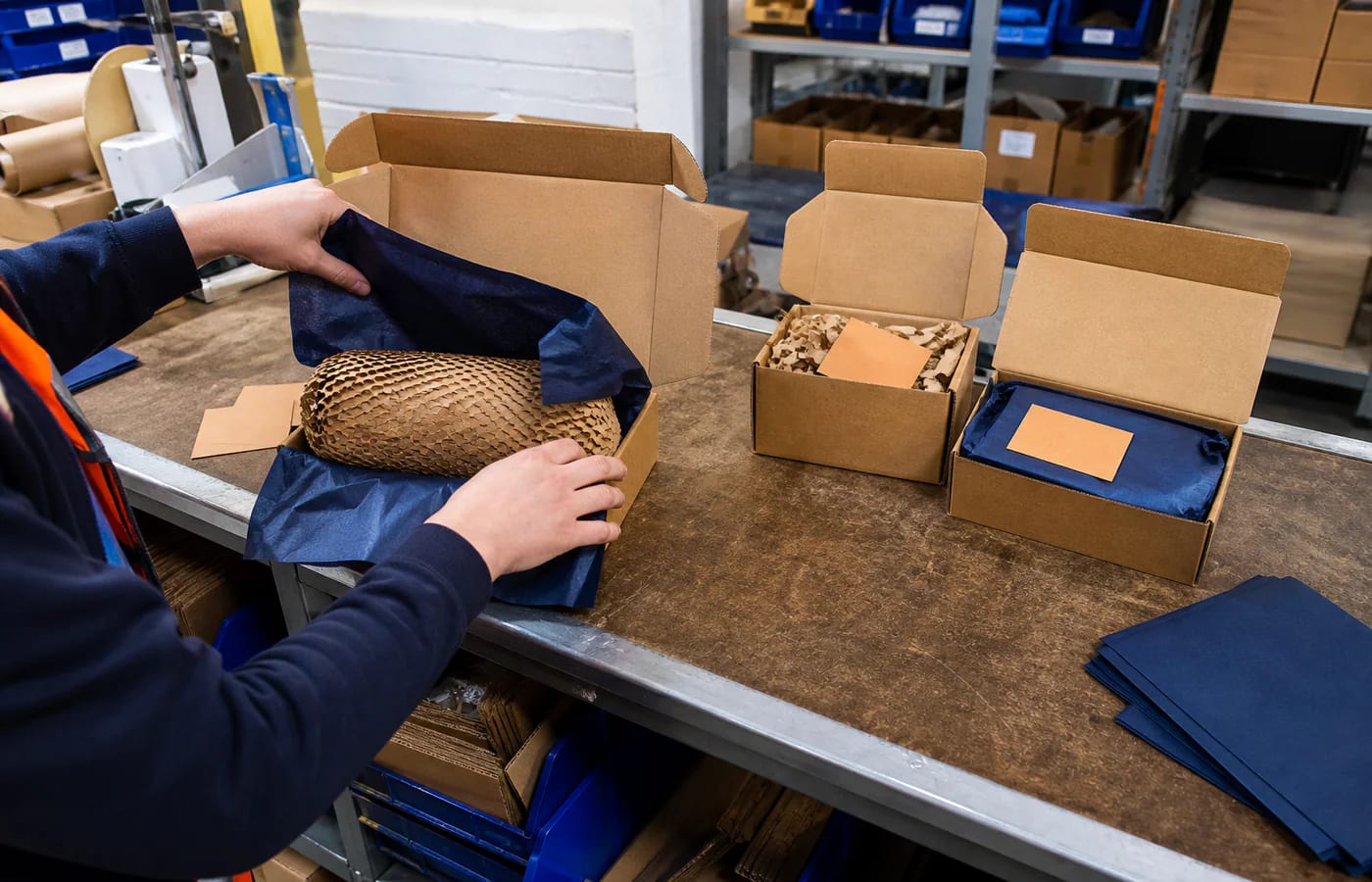
We build a sample with you before quoting and time it. That gives a per-unit rate grounded in the actual work, and it usually surfaces two or three changes to the build that take real cost out — a component order that halves the handling, packaging that does not need a second person, a step that can be pre-staged.
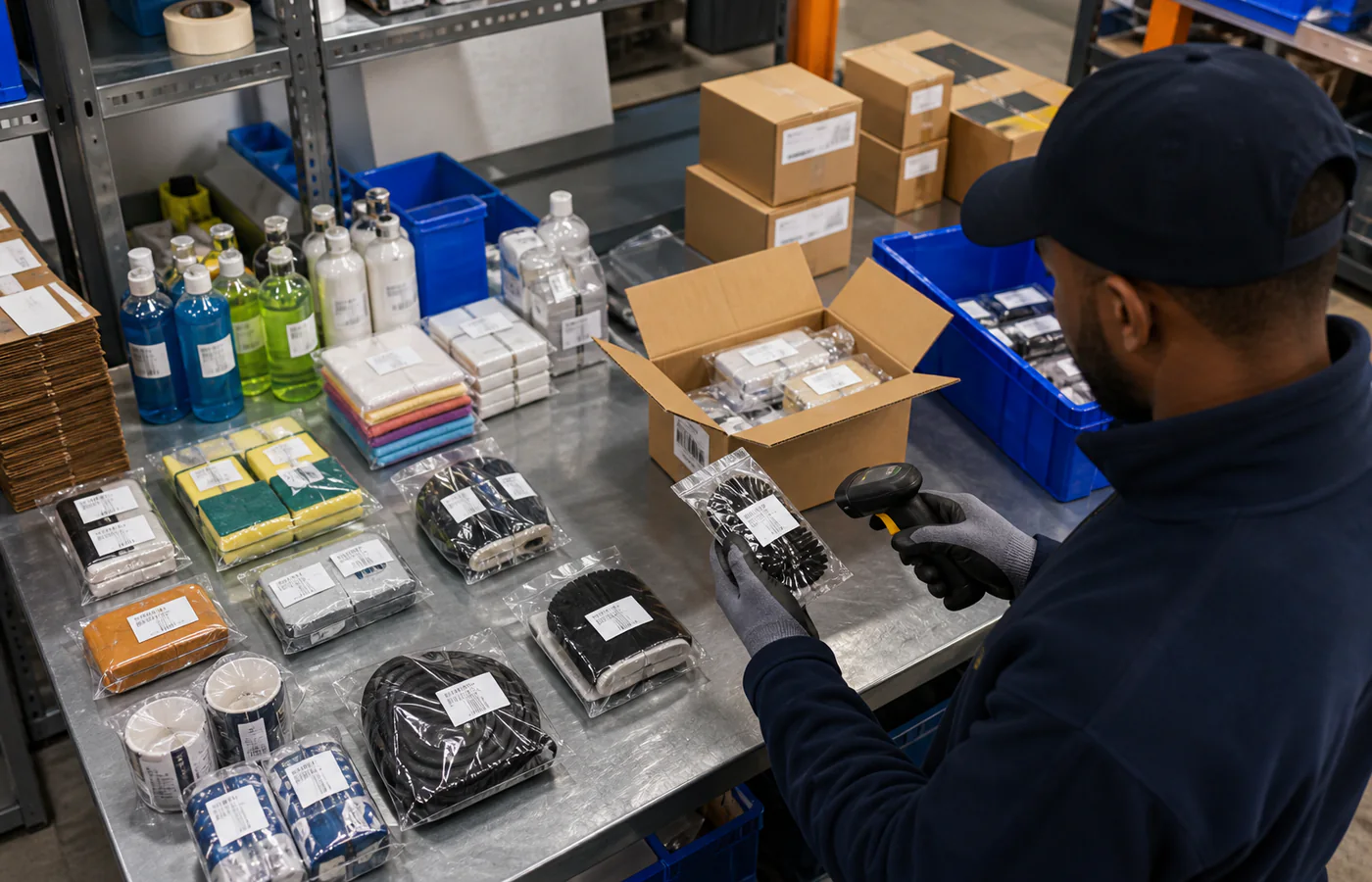
Components are held and counted as components. Finished kits are a separate SKU with their own stock figure, created by a build transaction that decrements the parts. That is what keeps your inventory honest through an assembly operation, and it is the part most often skipped.
- Sample built and timed before a rate is quoted
- Components and finished kits tracked as separate SKUs
- Build transactions that decrement parts and create stock
- Kits pre-built to a forecast so dispatch is not delayed
- Documented build specification with a photograph at the bench
- In-run quality checks at an agreed frequency
The kinds of build we run
Different in cost and in the risks worth planning for.
Subscription boxes
An entire cohort built ahead of the shipping window and staged, so the whole run dispatches on one day without absorbing the floor. Contents vary by cycle and by subscriber tier where needed.
Multipacks and bundles
Several units combined into one sellable SKU with its own barcode, for marketplaces or for a promotional price point.
Retail-ready packs
Built and labelled to a retailer's specification, including shelf-ready outers and the barcode placement their scanners expect.
Promotional and gift-with-purchase kits
Built to a campaign window, staged ahead of launch, with a rule deciding which orders receive them.
Sample and press kits
Small runs, high presentation standard, often assembled to a list you provide rather than a repeating specification.
Relabelling and rework
Barcode replacement, country-of-origin labelling, repackaging out of damaged outers and correcting a supplier's error at intake.
What keeps a long run consistent
Assembly quality is a process question, and these are the controls.
A photographed build specification
The correct build is pictured at the bench, so the standard is visible rather than remembered.
Component scanning into the build
Parts are scanned as they go in, which catches a wrong component before it is sealed inside five hundred boxes.
In-run checks at an agreed frequency
Sampled during the run rather than inspected at the end, when a fault means reworking everything.
Timed rate you can audit
The per-unit rate comes from a timed sample you were part of, so it can be revisited when the build changes.
Kitting & Assembly questions
The ones that come up on almost every call about this.
Per unit built, quoted against a timed sample. Components, packaging and storage are separate. Where a build is seasonal or a one-off campaign, we will quote a run rate rather than a standing per-unit rate.
Yes, and it is almost always better. Pre-built kits ship inside the normal dispatch window; on-demand builds add the assembly time to it. We build to a forecast you provide and hold the finished kits as their own SKU.
Components are counted as components and finished kits as a separate SKU. A build transaction decrements the parts and creates the kits, so at any moment you can see what is available as parts and what is available as finished goods.
Yes — that is the normal case for subscription boxes. Each cycle gets its own build specification and its own finished-goods SKU, so the reporting stays clean and last month's contents do not end up in this month's boxes.
There is no hard minimum, but very small runs carry a setup cost that makes the per-unit rate look high. If you are building fewer than a hundred at a time, we will tell you whether it is genuinely worth outsourcing yet.
Light assembly, yes. Anything needing calibration, electrical testing or certification is outside what a fulfilment floor should be doing, and we will say so rather than attempt it.
Where to look next
Send us the build and we will time it.
Describe the kit, or send a sample. You will get a per-unit rate grounded in the real work, plus whatever we spot that would take cost out of it.