
Pick And Pack, With The Scan That Stops The Error
The difference between a good pick and pack operation and an average one is what happens when the wrong item reaches the bench. Ours stops before the label prints.

Why picking errors survive good intentions
Nobody picks the wrong item on purpose. Errors come from the process, and they scale with volume in a way that care alone cannot offset.
Similar SKUs sitting next to each other
Two variants of the same product in adjacent locations produce errors indefinitely, no matter how experienced the picker is.
Nothing catches it downstream
In a visual-check operation, the pack bench confirms what the picker already decided. The wrong item gets packed carefully and shipped promptly.
Errors surface as product complaints
Customers report a wrong item as a problem with the product or the brand. The fulfilment cause is invisible in your support data, so it never gets fixed.
Accuracy degrades exactly when it matters
Peak brings temporary staff and time pressure. An operation relying on familiarity loses accuracy in the month it can least afford to.
Packing quality drifts
The hundredth order of the day gets less care than the first unless the specification is defined rather than demonstrated.
How the pick and pack process runs
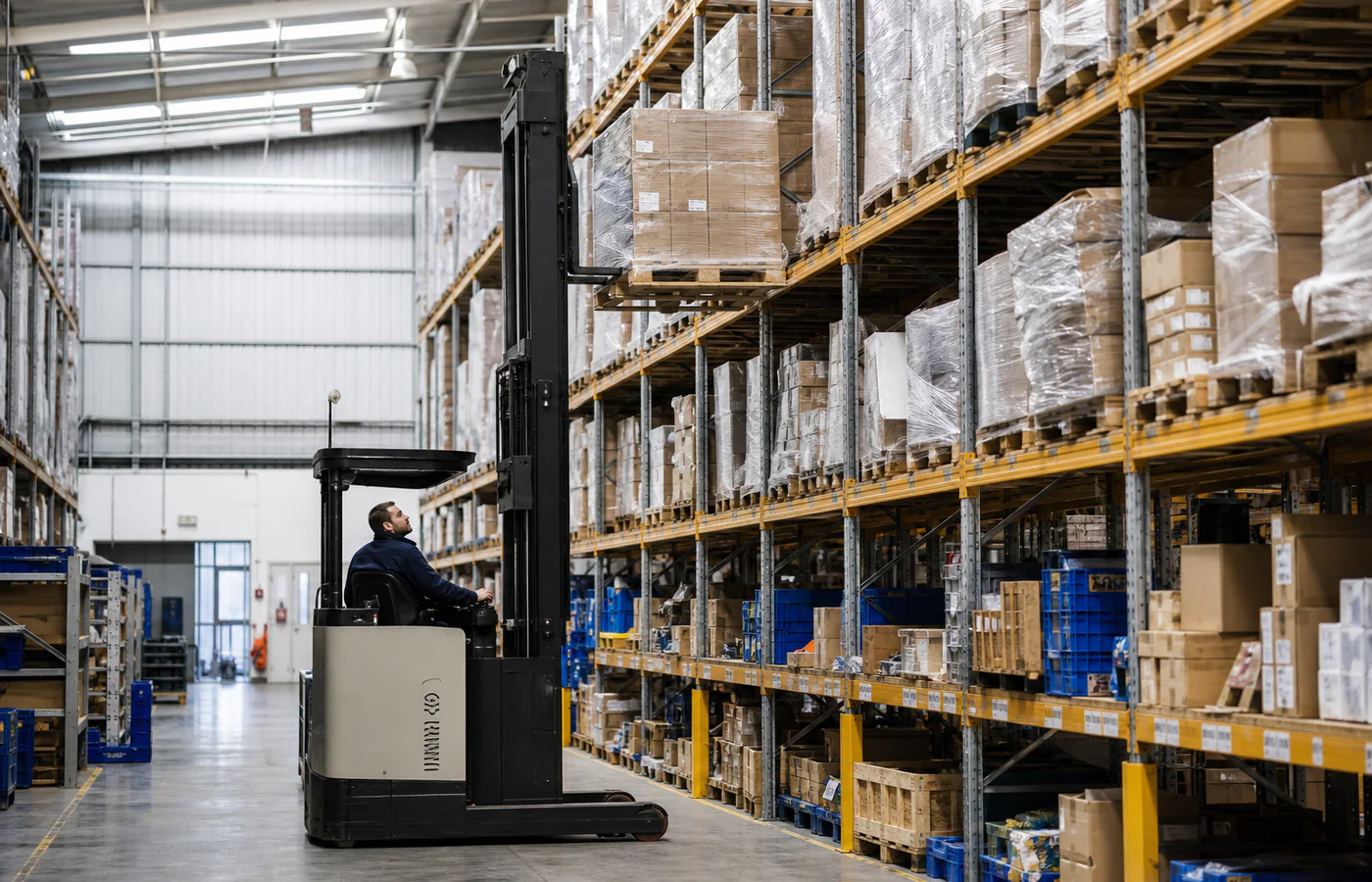
Every SKU has a barcode and a fixed home. Orders are batched by picking route rather than by arrival, so a picker walks one efficient path instead of criss-crossing the building. The location is scanned, then the item is scanned, and a mismatch stops the line at that point rather than at the customer's door.
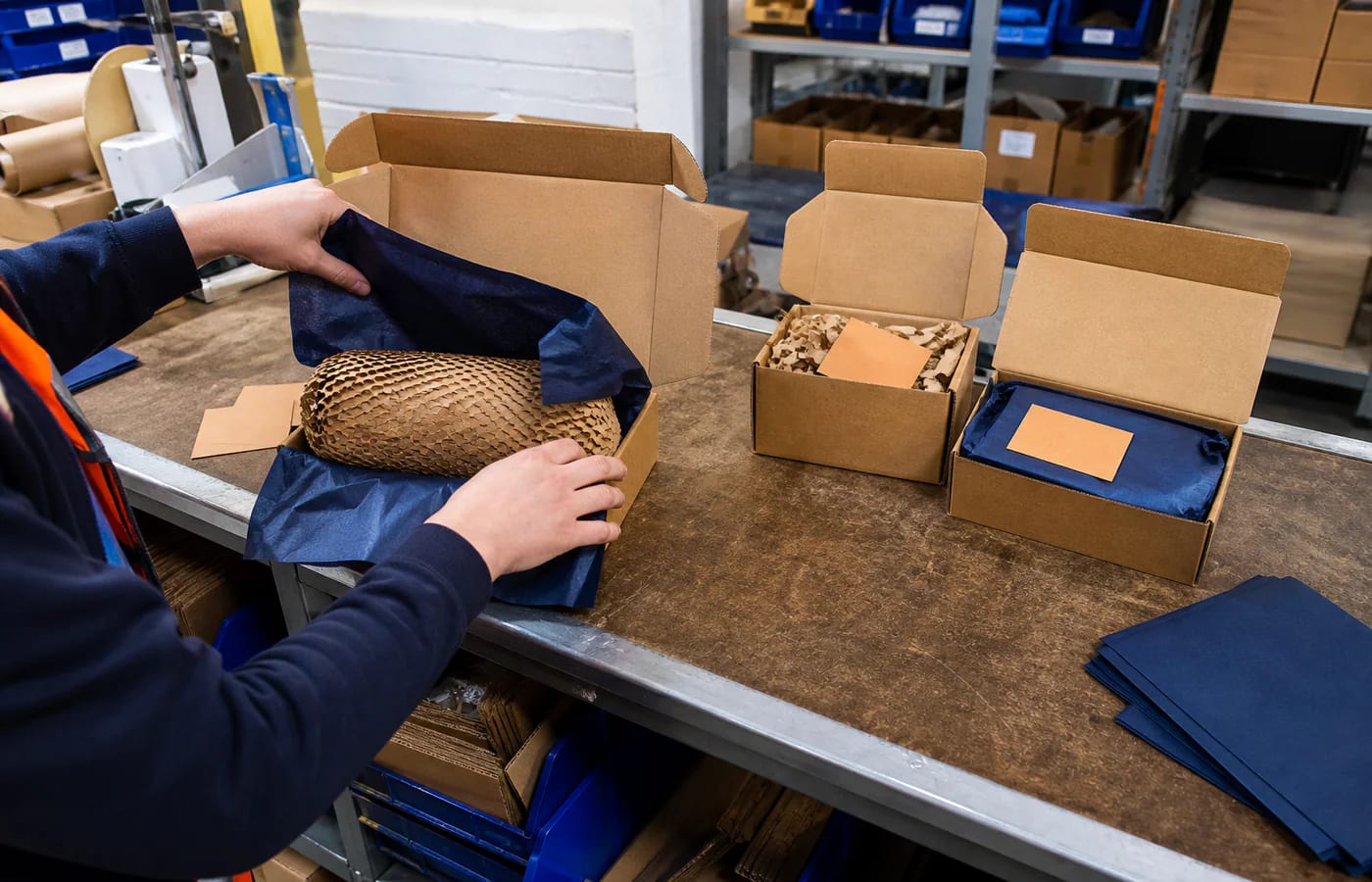
At the bench, items are scanned again against the order lines. The shipping label will not print until the order reconciles. Packing follows your written specification — carton, void fill, inserts, slip, tape — so the two hundredth parcel of the day is built the same way as the first.
- Fixed locations with barcoded pick faces
- Batch picking by route, not by order arrival
- Scan at location and at item, mismatch blocks the pick
- Second scan at pack, label prints only on reconciliation
- Written packing specification applied identically every time
- 21:00 same-day dispatch cut-off on working days
How orders are picked, and why it is done that way
Different order profiles want different picking strategies. Yours is chosen from your data rather than applied by default.
Single-order picking
One picker, one order, start to finish. Slowest per order and simplest to control — used for large, high-value or fragile orders where consolidation risk is not worth it.
Batch picking
Multiple orders picked in one pass, then sorted at the bench. The default for high volumes of small orders, and where most of the efficiency in a fulfilment operation actually comes from.
Zone picking
The building is split into zones with a picker in each, and orders pass between them. Used where the catalogue is too large for one walk to be sensible.
Forward pick faces
Fast-moving lines are replenished into a compact zone near the benches, so the majority of picks happen over a short distance.
Packing specification
Your carton sizes, void fill, inserts, packing slip and tape are documented as a spec sheet at the bench, not learned by whoever packed your orders last week.
Right-sizing
Cartons are selected to the order rather than to habit. Oversized packaging costs twice — once in material and again in volumetric carriage.
What makes the accuracy claim checkable
We publish the method rather than a headline percentage, because a percentage without a method behind it cannot be assessed.
A mismatch physically blocks the line
The control is preventive, not a check that flags an error after the fact.
A scan trail behind every parcel
Who picked it, from which location, at what time, and what was scanned at pack. Producible on request for any order.
Errors recorded, not absorbed
Where a mis-pick does reach a customer, it is logged against the SKU and the cause, so the pattern is visible rather than anecdotal.
Temporary staff work the same process
The scan is the control, so accuracy does not depend on how long someone has worked here. That is what makes peak survivable.
Pick & Pack questions
The ones that come up on almost every call about this.
Per order, at a base fee set by your total orders for the month — £1.00 per order for 1–49 orders a month, £0.95 for 50–99, £0.90 for 100–249, £0.85 for 250–499 and £0.80 for 500 or more. That covers the pick route, the bench and the first unit; each extra unit in the same order adds £0.10. Packaging is either supplied by you or agreed separately, and carriage is separate.
21:00 on working days for same-day dispatch, provided stock is available. Orders after the cut-off go out the next working day. Weekend handling is agreed per client because it depends on your carrier services.
Yes, and most brands do. Send your cartons, mailers, inserts and tape into stock and you pay handling rather than materials. We will flag it if a carton size is costing you more in volumetric carriage than it saves.
The order is held rather than shipped short by default, and it appears on the daily exception report. You set the standing rule at onboarding — hold, ship partial and follow up, or cancel the line — and it is applied consistently.
Yes, provided the rule can be driven by data on the order: a gift flag, an order value threshold, a channel or a note field. What we avoid is anything requiring a judgement call at the bench, because that is where consistency breaks down.
Yes. Fragile items get a protective packing specification agreed with you, and high-value stock can be held in a secure caged area with restricted access and its own pick process.
Where to look next


Get the scan between your customer and a wrong item.
Send your monthly order volume, SKU count and average items per order. We will price the pick and pack against your actual profile.